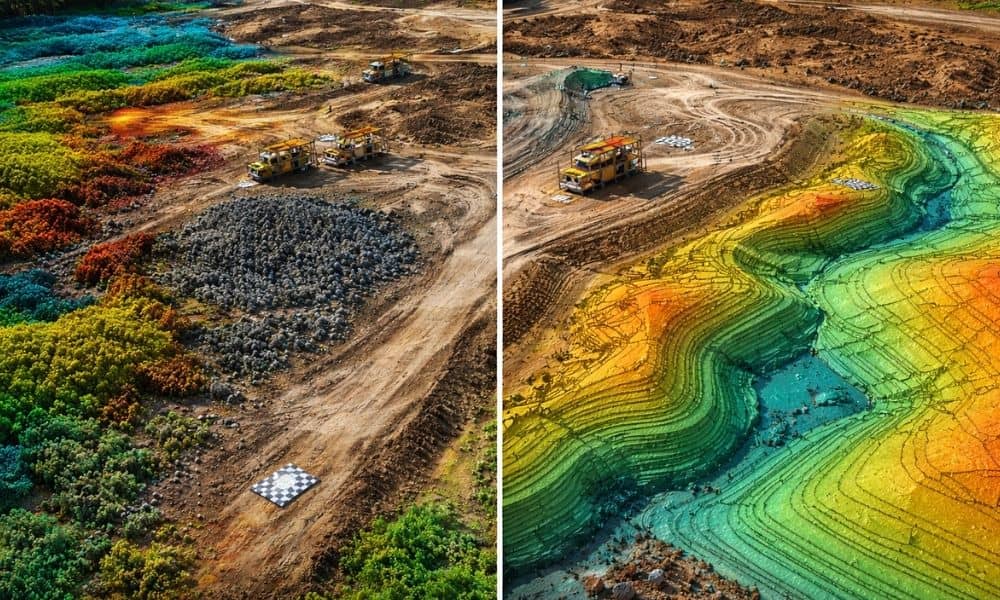
LiDAR mapping has become a go-to tool for site development in Chicago. Developers use it to get fast surface data, review elevation changes, and move projects forward with confidence. However, there is one part of LiDAR mapping that many clients never hear about. That part is called data registration.
You can fly the best drone over a site. You can collect millions of data points. Yet if those points do not align correctly, the final model will not match the real world. And when that happens, design problems follow.
So before you rely on LiDAR mapping for your next project, you should understand what data registration really means — and why it protects your budget and schedule.
LiDAR Mapping Does Not End in the Field
Many people think LiDAR mapping is all about flying a drone. In reality, the most critical work happens after the flight.
When a drone scans a large site, it does not capture everything in one single pass. Instead, it collects data in strips or sections. On bigger projects, crews may even return on another day to capture more data. Each of those sections creates its own cloud of points.
Data registration brings all those sections together. It aligns them into one accurate coordinate system. If even one section shifts slightly, the entire surface model can move.
At first, that shift may seem small. However, small errors grow quickly across large sites.
Why Data Registration Matters to Developers
Now let’s talk about what this means for you as a developer.
First, elevation drives design. Civil engineers use LiDAR mapping to create grading plans. They calculate cut and fill volumes. They design drainage systems. If the elevation data shifts even a few tenths of a foot, those numbers change.
As a result, you may see:
- Unexpected earthwork costs
- Drainage slopes that do not perform as planned
- Redesign during construction
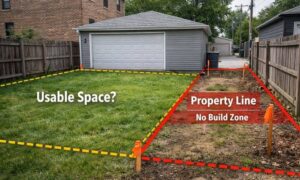
Second, horizontal alignment matters just as much. A small horizontal shift can affect building placement. That shift can also impact setbacks and utility routing. In tight Chicago parcels, precision matters. There is often no room for adjustment once construction begins.
Therefore, proper data registration in LiDAR mapping protects your site layout from the start.
How Registration Errors Happen
You might wonder how these problems occur.
Today, LiDAR mapping projects collect more data than ever. Higher-density scans create massive datasets. While that detail helps design, it also increases processing complexity.
In addition, many projects combine drone LiDAR with ground scans. That mix adds another layer of alignment work. If the processing team does not carefully check the overlap between datasets, small misalignments can slip through.
Automation has improved, but it does not replace human review. Software can align point clouds quickly. Still, it cannot always detect subtle shifts across long distances. That is why experience matters.
Experienced teams do not just trust the software output. They compare results against known control points and follow recognized industry accuracy guidelines, such as the ASPRS accuracy standards, to confirm the surface truly matches real-world conditions.
The Real-World Impact of Poor Registration
Let’s make this practical.
Imagine your team relies on LiDAR mapping for preconstruction earthwork estimates. The surface model sits just 0.2 feet higher than actual grade. That difference may not sound serious. However, across several acres, it can change thousands of cubic yards of material.
Now your contractor submits a change order.
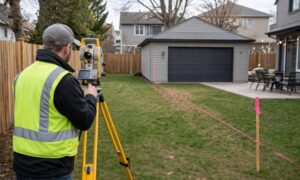
Or consider a site where horizontal alignment shifts slightly. The building footprint appears correct in design. Yet during staking, the survey team discovers discrepancies between the LiDAR surface and field control points.
Now your schedule slows down.
In both cases, the drone did its job. The issue happened during data registration.
What Proper LiDAR Mapping Registration Looks Like
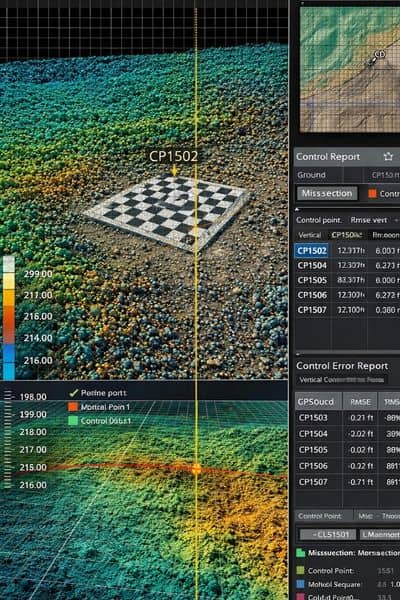
Strong LiDAR mapping projects begin with control.
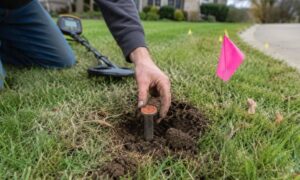
Before any flight, crews establish verified ground control points. These points anchor the dataset to real-world coordinates. Without that foundation, registration accuracy suffers.
Next, teams plan flight overlap carefully. Overlap gives the processing team enough shared data to align sections with precision. Afterward, the team reviews residual error reports. These reports show how closely the sections match.
However, reports alone do not guarantee quality. Skilled professionals review cross-sections and spot-check elevations. They compare the point cloud against known benchmarks. They confirm both vertical and horizontal accuracy.
When a firm follows this level of discipline, it goes beyond simply flying a drone. It delivers the kind of consistency and precision developers expect from high-accuracy drone LiDAR services — where the focus stays on dependable measurements, not just fast turnaround.
In other words, they treat LiDAR mapping as a measurement discipline — not just a data collection task.
Why Equipment Is Not the Real Differentiator
Developers often ask about equipment. What drone do you use? How fast can you mobilize? How dense is your scan?
Those questions matter. Still, they do not tell the full story.
Two firms can use the same drone and sensor. Yet one firm may deliver a stronger dataset because its processing team understands data registration deeply.
So instead of focusing only on hardware, ask about process.
- How do you establish control?
- What accuracy tolerance do you guarantee?
- Who reviews the registration results?
- How do you verify the final surface?
These questions help you separate fast data from reliable data.
Why This Matters in Chicago
Chicago development sites often sit in dense urban settings. Tall structures can affect GPS signals. Tight parcels demand strong horizontal precision. Multi-phase projects require consistent control from one phase to the next.
Because of that, LiDAR mapping must align perfectly with survey control. If phase one uses one coordinate setup and phase two shifts slightly, inconsistencies appear across the site.
Accurate data registration ensures every phase ties back to the same system. That consistency keeps design teams, contractors, and inspectors aligned.
Protecting Budget and Schedule
Ultimately, LiDAR mapping supports faster decision-making. However, speed without accuracy creates risk.
When data registration happens correctly, you gain:
- Reliable grading quantities
- Confident layout decisions
- Fewer redesign cycles
- Stronger coordination between survey and civil teams
- Smoother construction staking
As a result, you protect both budget and schedule.
On the other hand, poor registration introduces doubt. Teams question elevations. Engineers recheck slopes. Contractors pause work. Those delays cost more than careful processing ever would.
The Bottom Line
LiDAR mapping offers powerful insight into your site. It delivers detailed surface data quickly and safely. Yet the value of that data depends on how well it aligns behind the scenes.
Data registration may not sound exciting. Still, it forms the backbone of accurate site modeling. When done properly, it supports smart design, stable budgets, and confident construction.
So before you move forward with LiDAR mapping on your next development, look beyond the drone. Ask about control. Ask about accuracy. Ask about the people who process the data. The right partner will treat it as more than a flight — they will approach it as part of their professional drone LiDAR mapping services, where validation and precision matter just as much as speed.
Because in the end, precision in processing protects everything that follows.