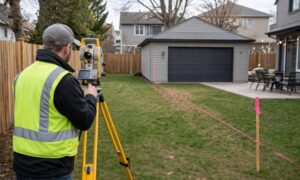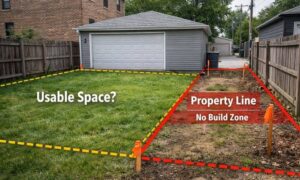
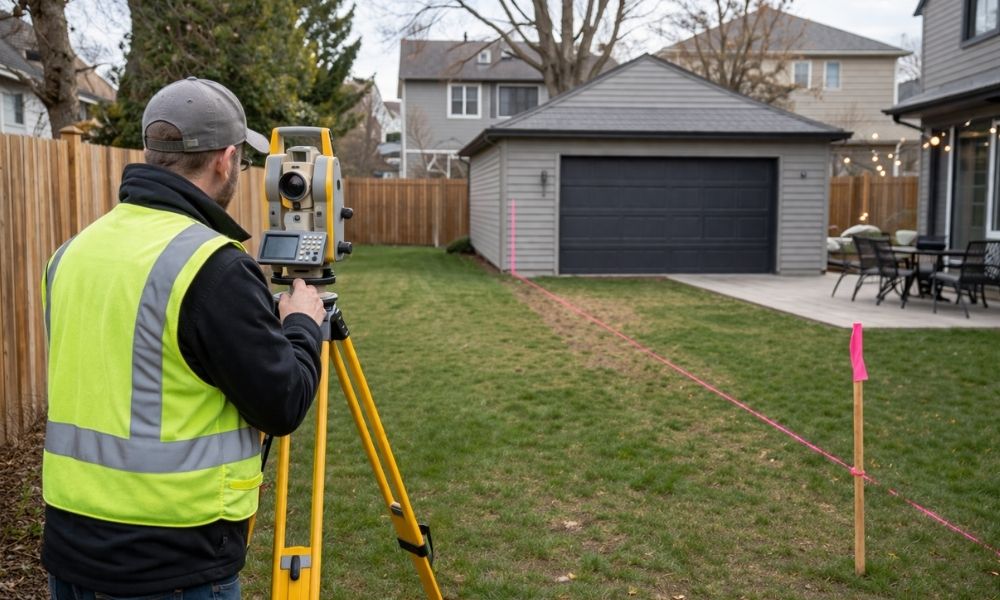
Building an extra unit in your backyard sounds like a smart move. Many homeowners in Chicago are thinking the same thing. An ADU can bring in rental income or give family members their own space. Still, there’s one step people often skip at the start. They look at the yard and assume they have enough room. That guess can lead to problems later. A boundary survey shows the exact limits of your property. It tells you what space you truly own and what space you can use. Most people don’t pay much attention to what a boundary survey shows until something doesn’t line up the way they expected. Without it, every plan is just a guess.
More ADUs, Less Room for Error
Chicago lots are tight. Homes sit close together, and many have garages right off the alley. Fences often run along the edges, so space fills up fast.
Now more owners want to build in those same areas, which makes things a bit tricky.
There isn’t much room to adjust if something is off. A few inches can shift where a wall goes. A foot can decide if the whole plan works. And if you’re not sure where your exact property lines fall, it’s easy to plan something that doesn’t quite fit.
Your Yard Isn’t Always What It Looks Like
Many people trust what they see.
They look at a fence and think, “That’s my line.” They look at a garage and assume it sits fully inside their lot.
That’s not always true.
Fences move over time. Old builds don’t always match legal lines. Some properties still follow records written decades ago.
So the open space behind your house may be smaller than you think.
A boundary survey removes the guesswork. It marks the true edges of your property. It shows where structures sit in relation to those lines.
That clarity changes everything.
What a Boundary Survey Shows You
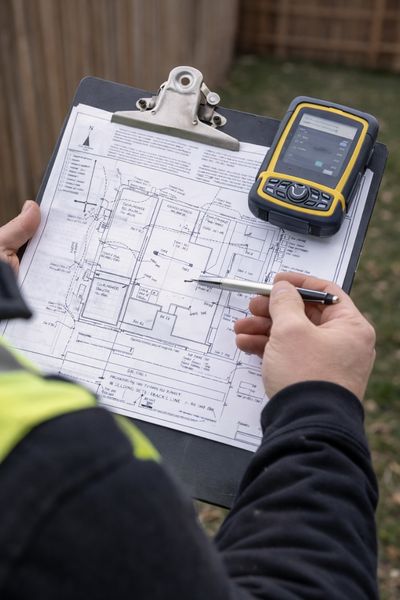
This is not about paperwork. It’s about real, usable space.
A boundary survey shows:
- The exact property lines
- The distance from your home to those lines
- Where your garage sits
- How much space remains for a new structure
- Any limits that affect where you can build
With this information, you stop guessing and start planning with facts.
Small Differences Change Big Decisions
On a wide lot, a small error might not matter.
Chicago lots are different.
Let’s say you plan to build a small unit behind your home. You measure the space by eye or with a tape. It looks fine.
Then the survey shows your garage sits closer to the line than you thought.
Now your build area shrinks.
That forces changes. Maybe the unit needs to be smaller. Maybe the layout shifts. Sometimes the plan no longer works.
That’s why the order matters.
Survey first. Design after.
Start With the Lot, Not the Design
Most people begin with ideas.
They sketch a layout. They picture where doors and windows go. They talk to a contractor.
Then they find out the space isn’t what they thought.
That wastes time and money.
Instead, start with the lot itself.
A boundary survey gives you the real shape and size of your build area. It tells you what fits before you spend on design work.
That makes every next step easier.
Garages and Alleys Make It Tricky
Many Chicago homes have detached garages near the alley.
That setup creates hidden limits.
The garage might sit very close to the property line. In some cases, it may not match the legal line at all. The space between the house and the garage can also vary more than expected.
If you plan to convert the garage or build near it, these details matter.
A boundary survey shows how everything lines up.
It gives you a clear view of how much space you truly have to work with.
Open Space Isn’t Always Buildable Space
A backyard may look wide and open.
That doesn’t mean you can build anywhere in it.
Some areas may be off-limits due to spacing rules. Others may sit too close to existing structures.
Without a survey, you won’t see those limits clearly.
With one, you can map out where a new unit can go and where it can’t.
That saves you from plans that won’t work.
When to Get a Boundary Survey
Timing matters.
You should get a boundary survey:
- Before buying a property for an ADU
- Before turning a garage into a living space
- Before adding a second structure
- Before making layout plans
Each of these steps depends on knowing your true lot lines.
Waiting too long leads to changes that could have been avoided.
A Better Way to Plan Your ADU
Building an ADU is a great idea. It can add value and create new income.
Still, the success of that project starts with something simple.
You need to know your space.
A boundary survey gives you that answer. It shows your limits, your layout options, and your real build area.
Once you have that, every decision becomes clearer.
And your project moves forward with confidence instead of guesswork.