
811 markings show where public utilities run, but they don’t include private lines, exact positions, or full site details.
What does 811 actually mark before you dig?
811 marks the approximate location of public utility lines like gas, electric, water, and communication lines. It helps reduce the risk of hitting major utilities, but it does not show exact positions, private lines, or full site conditions.
If you plan to dig, calling 811 is the first step. Crews come out and mark utility paths with paint or flags. That gives you a general idea of what runs underground.
What you see on the ground usually includes:
- Gas lines
- Electric lines
- Water lines
- Communication lines
That helps prevent major damage. Still, those markings are not precise. They are guides, not measurements.
What does 811 not show on your property?
811 leaves out several things that matter during construction or planning.
Here is what you do not get:
- Private utility lines going into your home
- Exact depth of any utility
- Exact position of lines
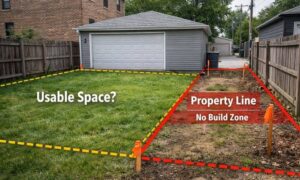
- Property boundaries
- Utility easements
- Drainage structures or smaller surface features
Private lines are the biggest issue. These can run to garages, sheds, outdoor lighting, or older additions. They often do not follow a straight or predictable path.
That gap is where problems start.
What do surveying companies find that 811 misses?

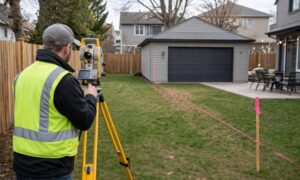
Surveying companies look at the full site, not just utility paths. They measure, verify, and piece everything together, which makes it easier to identify underground utility lines on your property, especially ones that are not marked or easy to notice before work begins.
Private lines to the building
Surveyors locate service lines that connect to the structure. That includes water, sewer, and electric.
In Chicago, many of these lines are old. Some have been rerouted over time. Some were never documented well.
That makes them easy to miss until work begins.
Property boundaries and space limits
Surveyors confirm where your land starts and ends. That matters when planning anything close to a line, fence, or structure.
A small mistake here can force you to move or remove part of a project.
Utility access areas
Utilities often have legal access zones on private property. These are not always visible on site.
You may think you have space for a garage or addition. Then you find out a utility needs access to that same area.
That changes the plan fast.
Surface features that reveal hidden lines
Surveyors study what is visible on the ground:
- Manholes
- Valves
- Drain inlets
- Utility covers
These features give clues about what runs below. They connect those clues to actual site measurements.
Why Chicago properties are harder to read
Chicago is not a clean-slate environment.
Many properties have:
- Older infrastructure
- Tight lot spacing
- Rear alleys with hidden lines
- Shared access between properties
Utility lines have shifted over time. Repairs, upgrades, and undocumented changes all add confusion.
Records do not always match what is on site.
That is why relying only on paint markings can lead to bad decisions.
Real situations where 811 falls short
These are common, not rare.
You plan to build a garage. The markings look clear. During digging, a private sewer line appears in the exact spot.
You buy a property and plan improvements. Later, you find part of the land has a utility access restriction. Your layout no longer works.
You add to a home. After construction, you learn a line runs too close to the new structure. Now you need to fix it.
Each situation starts the same way: someone assumed the markings showed everything.
When to call a surveying company
Bring in a surveying company early, not after a problem shows up.
Call before you buy a property, start designing, or plan any kind of construction. That includes building an addition, adding a garage, or getting ready to dig.
If excavation is part of your plan, getting a utility survey before digging can give you a clearer picture of what is actually on your site, especially on older properties in Chicago.
This step matters even more in older neighborhoods, where hidden lines and past changes are harder to spot.
How surveying companies help you plan better
Surveying companies give you a clear picture of your site before work begins.
That helps you:
- Avoid unexpected utility conflicts
- Plan layouts that actually fit
- Work better with contractors and designers
- Reduce delays and redesigns
You stop guessing. You start working with real information.
Why 811 alone is not enough
811 helps prevent major utility damage. That is useful. It is not a complete site check.
It does not cover private lines. It does not confirm boundaries. It does not show how everything fits together.
Surveying companies fill that gap.
If you are working on a Chicago property, that extra step is not optional. It is what keeps a simple project from turning into a costly fix later.
FAQ
Does 811 mark private utility lines?
No. 811 marks public utilities only. Private lines on your property are not included.
Do 811 markings show exact locations?
No. They show approximate paths, not precise positions or depths.
Why do I still need a survey after calling 811?
A survey shows boundaries, private lines, and site conditions that 811 does not cover.
Are properties more complex for utilities?
Yes. Older infrastructure and tight layouts make utility paths less predictable.