Property survey markers are physical objects placed by licensed surveyors to mark the corners and boundary lines of a piece of land. They are usually iron rods, pipes, or concrete posts buried 6 to 18 inches underground. You can find them using a metal detector and your property’s recorded plat map.
What Are Property Survey Markers?
If you own land, property survey markers show exactly where your property begins and ends. These markers are placed by licensed land surveyors and recorded with the county. They are the physical proof of your legal property lines.
Markers are not just helpful. They are legally required. According to the National Society of Professional Surveyors, each state sets its own rules for how markers must be placed and what materials must be used. In all 50 states, it is a crime to move, destroy, or remove a survey marker. Penalties can include heavy fines and even jail time.
Types of Property Survey Markers
The most common property survey markers are iron rebar rods, iron pipes, concrete posts, and brass discs. Iron rods are the most common type used today. They are usually topped with a plastic cap that shows the surveyor’s license number. Temporary wooden stakes are not permanent markers.
Iron Rebar Rods and Pipes
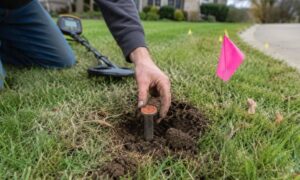
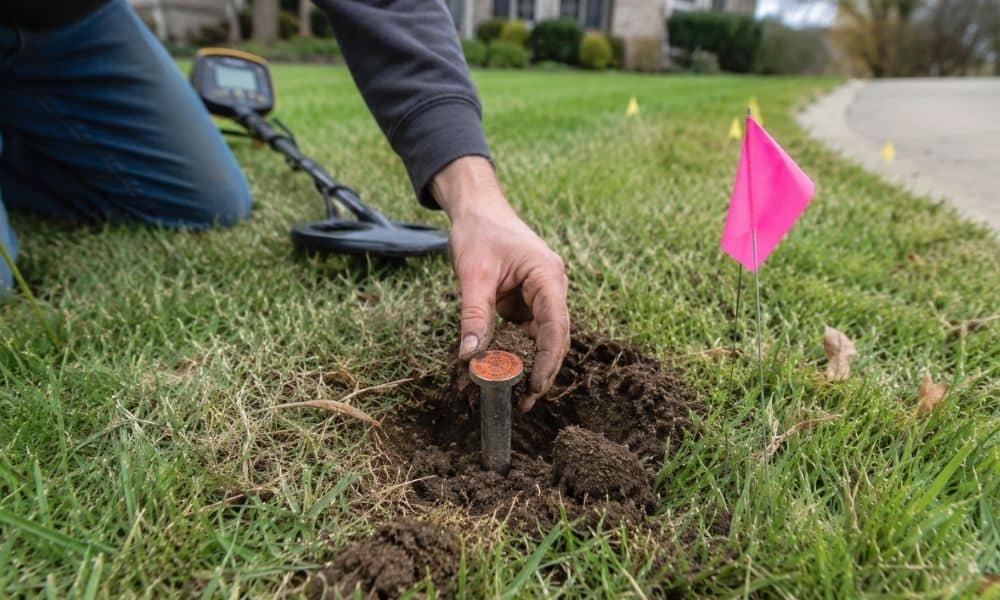
Iron rods and pipes are the most common markers used on residential properties. They are usually half an inch wide and buried just below the surface. Many have a colored plastic cap on top that is stamped with the surveyor’s license number.
Here is what the cap colors usually mean:
- Yellow or orange cap: A marker recently set by a licensed surveyor
- Red cap: A marker that was found and confirmed, not newly placed
- No cap: An older rod that was set before caps were required. Verify it with a surveyor before relying on it.
Concrete Posts
Concrete posts are larger and heavier than iron rods. They are often used at subdivision corners or on large commercial properties. You may also see them at the corners of older neighborhoods. They are usually set deeper than iron rods, sometimes 24 to 36 inches underground.
Brass and Aluminum Discs
Brass or aluminum discs are round and set flush into concrete or rock. These are most often elevation benchmarks placed by the U.S. Geological Survey. They are not property corner markers, but surveyors use them as reference points for elevation and flood work.
Wooden Stakes and Flagging Tape
Wooden stakes with colored flagging tape are temporary markers only. They are placed during active survey or construction work and will not last. Do not rely on them for legal boundary decisions.
Flagging tape colors often follow this pattern:
- Pink or red: Property corners or boundary lines
- Blue: Survey control points
- Orange: Utility locations
- White: Proposed construction areas
How to Find Property Survey Markers: Step by Step
To find property survey markers, first get your recorded plat map from the county recorder. Then measure from a fixed reference point like a curb or sidewalk corner. Use a metal detector to scan for iron rods underground. If you cannot find them, hire a licensed land surveyor to locate or reset them.
Step 1. Get Your Recorded Plat Map
Your plat map shows the exact dimensions of your property, including distances and angles for each side. You can get it from:
- Your county recorder’s or assessor’s office
- Your title company’s closing documents
- Your county’s online GIS or parcel map portal
Step 2. Measure from a Fixed Starting Point
Use your plat map to measure from a known fixed point. A curb corner, sidewalk edge, or street intersection works well. Mark your estimated corner location with a small flag before you start searching.
Step 3. Scan with a Metal Detector
A basic metal detector set to find iron or ferrous metals will pick up buried rods and pipes. Sweep slowly along the estimated boundary line. Most markers are 6 to 18 inches underground, but frost in colder areas can shift them slightly.
Step 4. Dig Carefully
Once you get a signal, use a hand trowel to carefully uncover the marker. Do not move it. Take photos of it in place, including any cap or stamp details.
Step 5. Call a Surveyor If You Cannot Find Them
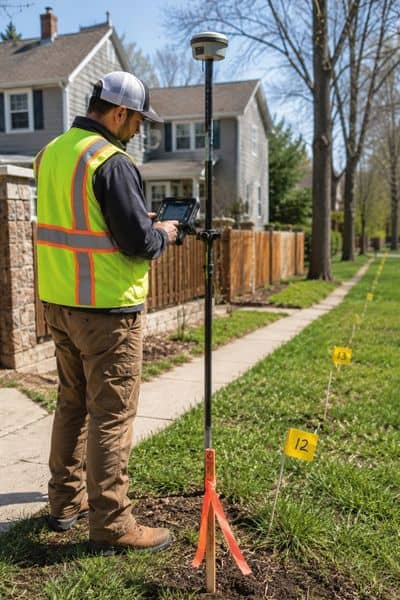
If you cannot locate your markers, do not guess where your boundary is. Hire a licensed land surveyor. They will:
- Research public deed and plat records
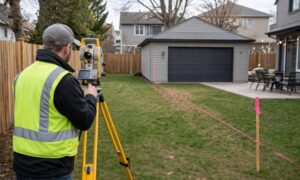
- Use GPS and survey instruments to find the correct location
- Set new legal monuments if the originals are gone
- Provide a written survey report that holds up in court
The American Congress on Surveying and Mapping reports that over 60% of residential property disputes involve missing or misidentified boundary markers. The average boundary dispute costs between $15,000 and $65,000 to resolve in court.
Why Finding Markers Matters Before Common Projects
You should know where your markers are before starting any of these projects:
| Project | Why It Matters |
| Building a fence | A fence even a few inches over the line may need to be removed |
| Adding a driveway | Many permits require a current plat showing legal lines |
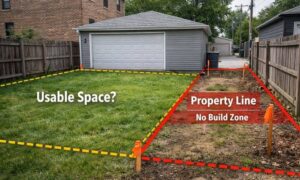
| Building an addition | Setback rules are measured from the legal property line |
| Landscaping near the edge | Retaining walls or patios may cross into easement areas |
| Appealing your property tax | Correct lot dimensions can reveal assessment errors |
Frequently Asked Questions
Can I find property survey markers on my own?
Yes. You can search for existing markers using a metal detector and your plat map. But if markers are missing or you are not sure what you found, hire a licensed land surveyor. Only a surveyor can legally reset lost corners.
How deep are survey markers buried?
Most iron rods and pipes are set 6 to 18 inches below the surface. Concrete posts may go 24 to 36 inches deep, especially in colder climates where frost can move objects underground.
What happens if a survey marker is missing?
Missing markers are common. Construction, landscaping, and frost can all cause them to disappear. A licensed surveyor can research the records and re-establish the corners legally.
How much does it cost to locate property markers?
A boundary survey to locate and confirm markers typically costs $500 to $2,500 for a standard residential lot. The price depends on lot size, local rates, and how many prior records exist.