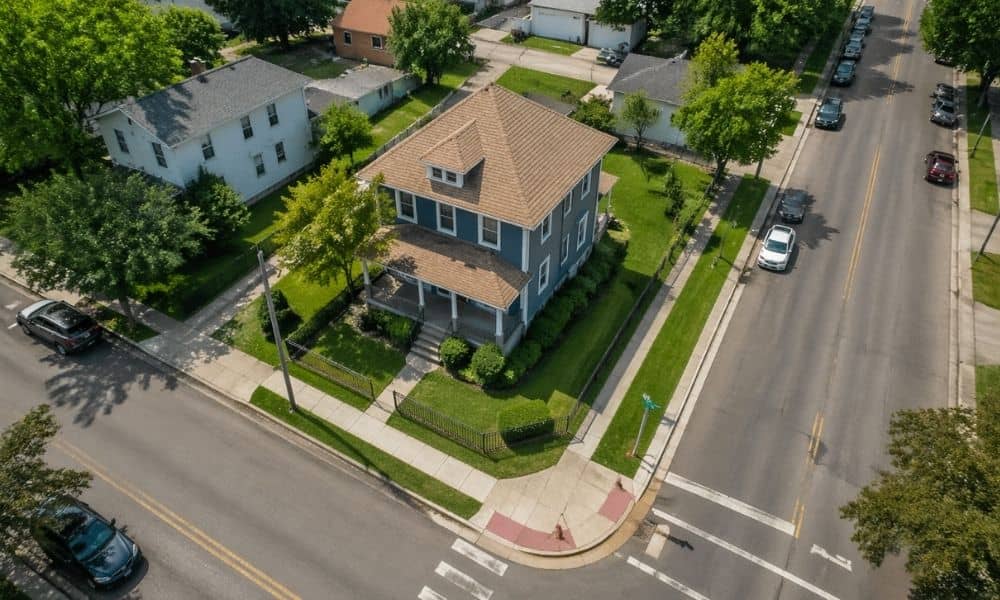
You call two survey companies. Both check your property. Then the quotes come back, and yours is higher. That feels strange at first. The lots look about the same. Nothing really stands out. You start wondering what a normal survey cost even looks like in Chicago. Then you notice one thing. Your property sits on a corner. That one detail changes the job. It adds more steps, more checks, and more time. That is why your boundary survey cost ends up higher.
Why boundary survey cost is not based on lot size
Most people think size controls price. Bigger lot, higher cost. Smaller lot, lower cost.
Survey work does not follow that rule.
Surveyors look at how long the job will take. They think about how many points they must check. They also think about how much research they must do.
A small lot with more edges can take longer than a large simple one. So the boundary survey cost goes up even when the lot looks small.
What makes a corner lot different
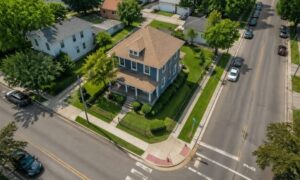
A corner lot touches more than one public space. It might face two streets. In Chicago, it often touches an alley as well.
That means more sides sit out in the open. A mid-block lot stays tucked between neighbors. A corner lot sits out where everyone can see it.
Each exposed side must be checked. Each one adds time. That is the first reason your boundary survey cost is higher.
More corners mean more work in the field
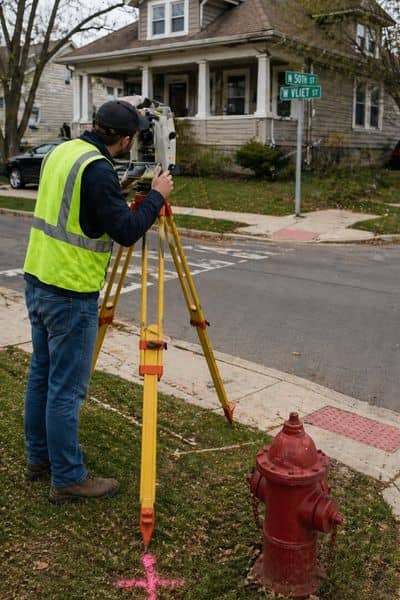
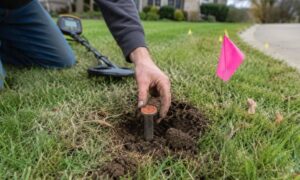
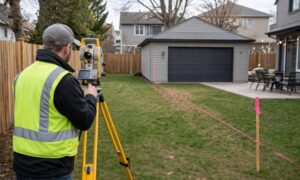
A surveyor must find and confirm every corner of your property.
On a simple lot, there are four corners. That sounds easy.
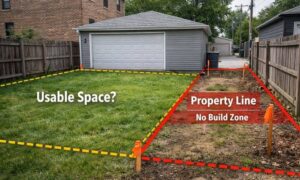
On a corner lot, things get tricky. Each corner connects to a street or an alley. The surveyor must check how your property lines meet those public areas.
They must measure each point with care. They must match those points with official records.
If a marker is missing, they must set it again. That takes extra time.
All of that work adds to the boundary survey cost.
Streets and alleys make the job harder
Chicago has a tight grid. Houses sit close to sidewalks and curbs. Many homes also back up to alleys.
On a corner lot, your property touches more of these features.
The surveyor must figure out where your land ends. They must also confirm where the street or alley begins.
That might involve checking curb lines, sidewalk edges, and alley paths.
It sounds simple, but it is not. Small differences matter. A few inches can change a line.
So the surveyor slows down. They double-check everything. That extra care raises the boundary survey cost.
The research takes time too
Fieldwork is only part of the job. A lot happens at a desk.
Surveyors study old maps and records. They check past plats. They look at nearby lots.
Corner lots connect to more neighbors and more public space. That means more records to review.
In older Chicago areas, records can be unclear. Some do not match what sits on the ground.
When that happens, the surveyor must sort it out. That can take longer than the field visit.
That hidden time adds to the boundary survey cost.
Missing markers are common in busy areas
Corner lots sit near sidewalks and streets. People walk there every day. Cars pass by. Work crews dig and repair.
Markers can get lost or moved.
When a surveyor cannot find a corner marker, they must rebuild that point. They use measurements and records to place it in the correct spot.
That work takes skill and time. It also adds cost.
So if your lot has missing markers, your boundary survey cost will rise.
Why quotes can look very different
You may get more than one quote. The numbers may not match.
That does not mean one is wrong.
Each surveyor decides how much work to include. One may plan a full check of all sides and records. Another may limit the scope.
A lower quote might skip steps. A higher quote might include deeper research and more field checks.
That is why it helps to look at what is included, not just the price.
What you should check before you choose
Before you pick a survey, take a moment to ask a few questions.
Will they locate every corner? Will they check the street and alley lines? Will they study nearby lots? What happens if a marker is missing?
These answers show what you are paying for.
A higher boundary survey cost often means more complete work.
Why the higher cost can make sense
A corner lot has more edges and more contact with public space. That makes the job more detailed.
The surveyor must measure more points. They must review more records. They must deal with more unknowns.
That takes time. Time drives the cost.
So when your quote comes in higher, it usually reflects the extra work needed to do the job right.
Final thought
Corner lots in Chicago look simple from the outside. The work behind them tells a different story.
More sides. More checks. More research.
That is why the boundary survey cost is higher.
Once you see the steps involved, the price starts to make sense.