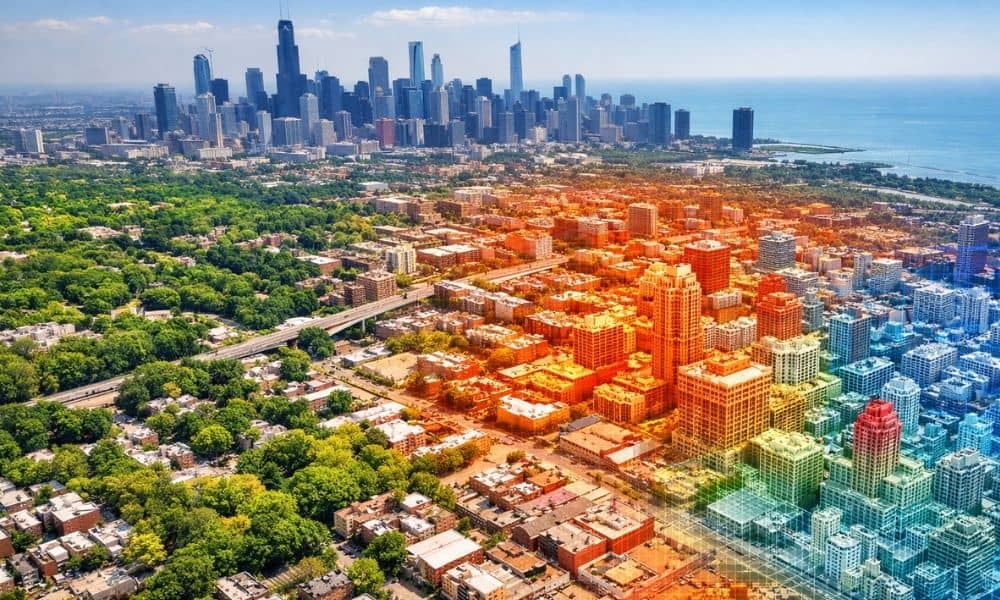
Chicago is known for its tall buildings, busy streets, and changing seasons. However, in recent years, the city has faced a growing challenge that many people do not see right away—urban heat. Some neighborhoods feel much hotter than others, even on the same day. At the same time, tree cover across the city is uneven. These two issues are closely connected. Today, lidar mapping chicago projects are helping planners, engineers, and researchers understand this problem in a much clearer way. Instead of guessing where heat builds up or where trees are missing, teams can now see the city in detailed layers. This data is changing how Chicago thinks about heat, shade, and long-term planning.
Why Urban Heat Matters in Chicago
Urban heat happens when buildings, pavement, and rooftops absorb and hold heat. Unlike grass or trees, these surfaces do not cool down easily. As a result, some areas stay warmer well into the night.
In Chicago, this matters for several reasons. First, heat affects public health. Hotter neighborhoods can lead to higher energy use and greater strain on cooling systems. Second, heat can impact comfort, walkability, and even property value. Because of this, city leaders and developers now want better ways to measure where heat builds up and why.
This is where LiDAR mapping steps in.
How LiDAR Mapping Sees the City Differently
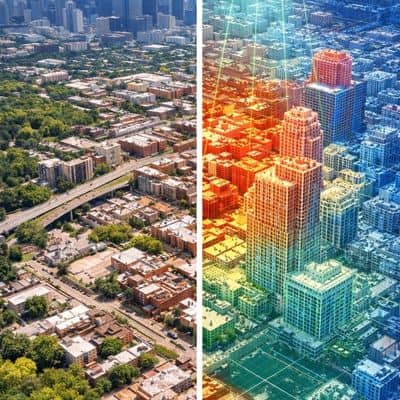
LiDAR stands for Light Detection and Ranging. It works by sending laser pulses from the air toward the ground. These pulses bounce back and create millions of accurate data points. Together, they form a detailed 3D picture of the city.
With lidar mapping, analysts can see building heights, ground surfaces, and vegetation with high precision. Unlike standard aerial photos, LiDAR does not just show what the city looks like. Instead, it shows shape, height, and structure.
Because of this, LiDAR allows teams to study how heat interacts with the built environment. It also makes it easier to understand how shade moves across neighborhoods throughout the day.
Connecting Building Height to Heat Patterns
One major factor in urban heat is building height and density. Taller buildings can block wind and trap heat. Large roof surfaces can also absorb sunlight for long periods.
LiDAR data helps measure these conditions clearly. By mapping roof height and spacing, planners can see where heat may build up. For example, blocks with little spacing between buildings often hold more heat than areas with open space.
Because LiDAR captures this information at a block-by-block level, it allows for targeted analysis. Instead of labeling an entire neighborhood as “hot,” teams can focus on specific streets or parcels. This level of detail helps support smarter decisions during planning and redevelopment.
Why Tree Canopy Coverage Makes a Big Difference
Trees play a huge role in cooling cities. They provide shade, reduce surface temperatures, and improve air quality. However, measuring tree canopy is not as simple as it sounds.
Aerial photos often show tree tops, but they do not always reveal true canopy size or height. Shadows, buildings, and overlapping branches can hide important details. LiDAR solves this problem.
Using LiDAR, analysts can measure tree height and canopy spread accurately. They can also separate trees from buildings and other structures. This makes it easier to calculate how much shade an area really has.
In Chicago, this data helps identify neighborhoods with low canopy coverage. As a result, planners can see where tree planting efforts may have the biggest impact.
Understanding Heat and Shade at the Neighborhood Level
One of the biggest advantages of lidar mapping is how local the data can be. Heat does not affect every block the same way. Even small changes in elevation, shade, or surface type can change how hot an area feels.
By combining LiDAR data with temperature and surface models, analysts can study how shade from trees or buildings affects ground temperatures. This helps explain why two nearby areas can feel very different on a hot day.
Because of this insight, city planners can design solutions that match real conditions. Instead of broad rules, they can focus on specific problem areas.
Why This Matters for Redevelopment Projects
Urban redevelopment often replaces older structures with new buildings. While this brings growth, it can also reduce tree cover and increase heat if not planned carefully.
LiDAR-based analysis helps teams understand existing conditions before changes happen. It shows where trees currently provide shade and where surfaces already absorb heat. With this knowledge, designers can plan layouts that reduce heat impact instead of increasing it.
For developers, this means fewer surprises during review. For communities, it means better outcomes after construction.
Public Data vs. Project-Specific Analysis
Illinois offers public LiDAR datasets that are useful for early review. These datasets help teams understand general conditions across the city. However, public data may not always be detailed enough for site-level decisions.
When projects involve dense urban parcels or sensitive areas, project-specific LiDAR analysis often becomes necessary. Custom data collection allows for higher resolution and tailored deliverables. This ensures the analysis matches the project’s exact needs.
Because Chicago has complex urban conditions, many teams choose to supplement public data with focused LiDAR surveys.
A Shift Toward Smarter Urban Planning
The way Chicago uses LiDAR is changing. What started as a tool for elevation mapping now supports climate-related planning. By understanding heat and tree canopy together, the city can make better long-term decisions.
This shift also benefits private projects. Developers and engineers who understand these patterns can design sites that work better for people and the environment. They can also respond more clearly to city goals and community concerns.
Looking Ahead
Urban heat and tree canopy coverage will remain important topics. As summers grow warmer and development continues, the need for clear data will only increase.
Lidar mapping provides that clarity. It helps explain how buildings, trees, and surfaces interact across the city. More importantly, it supports planning that looks beyond today and toward long-term comfort and resilience.
In the end, better data leads to better decisions. And in a city as complex as Chicago, that makes all the difference.