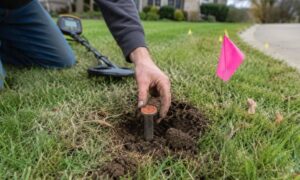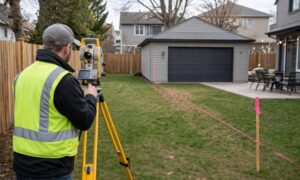
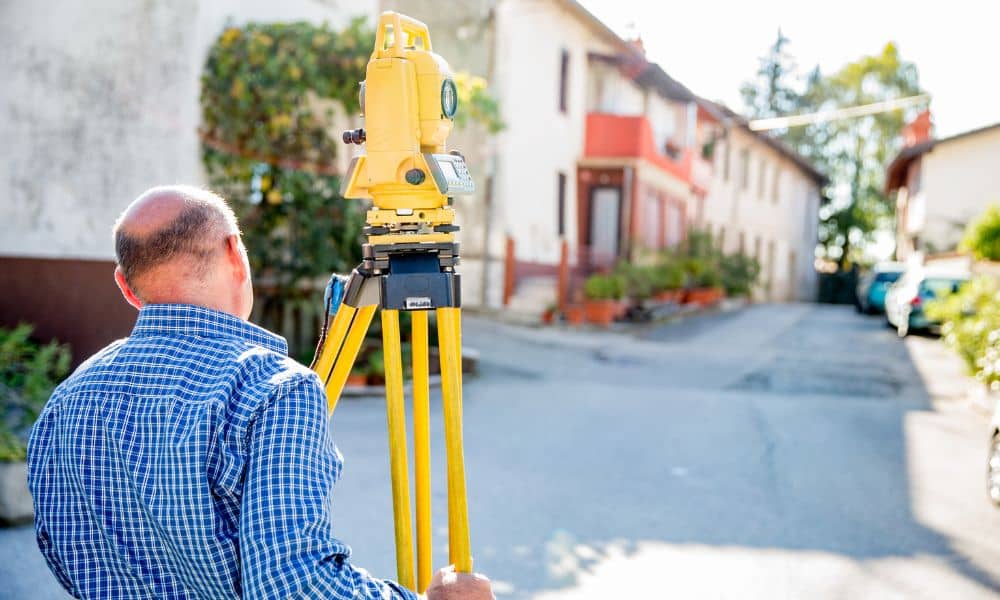
Living in Chicago means living close to your neighbors. Homes sit shoulder to shoulder. Side yards run narrow. Rear lots leave little room for error. Because of that, property line issues don’t start with bad intentions. They start with assumptions. A boundary line survey removes those assumptions before they turn into expensive disputes.
Most property owners don’t plan to argue with a neighbor. They plan a garage rebuild, a small addition, or a new fence. Then a problem appears halfway through the project. Suddenly, the question isn’t about design or cost. It’s about where the property line actually sits.
Why property line mistakes happen in dense neighborhoods
Chicago neighborhoods grew fast and changed often. Many lots came from old plats drawn decades ago. Over time, people added garages, porches, and walkways. Some owners relied on fences. Others trusted what the last owner said. As years passed, those informal markers started to feel official.
However, feelings don’t hold legal weight. When a new project begins, those old assumptions can fall apart. Even a few inches can matter when homes sit close together. That’s why property line disputes show up more often in dense areas than in wide suburban lots.
The real risk starts after construction begins
Many disputes don’t start with neighbors arguing. They start when work begins. A contractor follows the footprint they receive. A neighbor notices the structure feels closer than before. Then the questions start.
At that point, stopping work costs money. Crews pause. Materials sit unused. Permits stall. All of this happens while everyone waits for answers. A boundary line survey prevents this situation by setting clear limits before any work begins.
Instead of guessing, everyone works from the same facts.
Why permits alone don’t protect property owners
Some homeowners believe permits protect them from boundary issues. Unfortunately, permits focus on zoning and building codes. They don’t confirm property lines. The city assumes owners build within their own boundaries.
If an inspector suspects a structure crosses a line or violates setbacks, the city may issue a stop-work order. At that moment, the burden falls on the owner to prove compliance. A boundary line survey provides that proof early, not after the problem appears.
Contractors build what they’re given
Contractors don’t verify ownership lines. They build based on plans, markers, or instructions from the owner. If those instructions rely on an assumed boundary, the risk shifts to the homeowner.
This issue shows up often with garage rebuilds, additions, and accessory structures. A structure may match the old footprint, yet still sit partially over a legal boundary. Without a boundary line survey, no one knows for sure.
When owners confirm boundaries first, contractors can work with confidence. Projects move faster. Changes stay minimal. Costs stay under control.
Verbal agreements don’t survive ownership changes
Neighbors often say, “It’s fine.” That agreement may feel solid today. However, properties change hands. New owners don’t inherit verbal promises. They rely on legal records.
Once ownership changes, informal agreements lose value. At that point, only documented boundaries matter. A boundary line survey protects both sides by creating a clear record that holds up over time.
Why inches matter with zoning setbacks
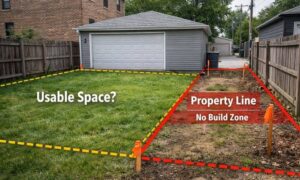
Chicago zoning rules leave little margin for error. Side-yard and rear-yard setbacks often allow only a small buildable area. If a boundary shifts by inches, a compliant design can become a violation.
This problem forces owners to redesign projects late in the process. Redesigns cost money and time. They also frustrate everyone involved. A boundary line survey prevents this by giving designers accurate dimensions from the start.
The cost of guessing versus the cost of clarity
Many owners skip surveys to save money. Ironically, that choice often leads to higher costs later. Redesigns, legal consultations, and construction delays add up fast.
A boundary line survey costs far less than fixing mistakes mid-project. More importantly, it protects the entire investment. Owners gain peace of mind knowing their work stays within legal limits.
When a boundary line survey makes sense
Not every property needs a survey right away. However, certain situations raise the risk. If you plan an addition, rebuild a garage, or modify a structure near lot lines, a boundary line survey makes sense. The same applies when buying properties with shared access or tight spacing.
Ordering the survey early keeps decisions simple. It also keeps relationships intact.
How surveys prevent disputes before they start
Disputes grow when uncertainty exists. Clear boundaries remove that uncertainty. When owners share survey results early, neighbors understand where lines sit. Conversations stay calm. Decisions stay fair.
A boundary line survey doesn’t take sides. It shows facts. Because of that, it helps everyone move forward without conflict.
Final thoughts
Property line disputes don’t start with bad neighbors. They start with unclear boundaries. In dense Chicago neighborhoods, guessing carries real risk. A boundary line survey replaces assumptions with facts.
By confirming boundaries before building, owners protect their time, money, and peace of mind. Clear lines create better projects, smoother permits, and stronger neighbor relationships. In the end, clarity always costs less than conflict.