
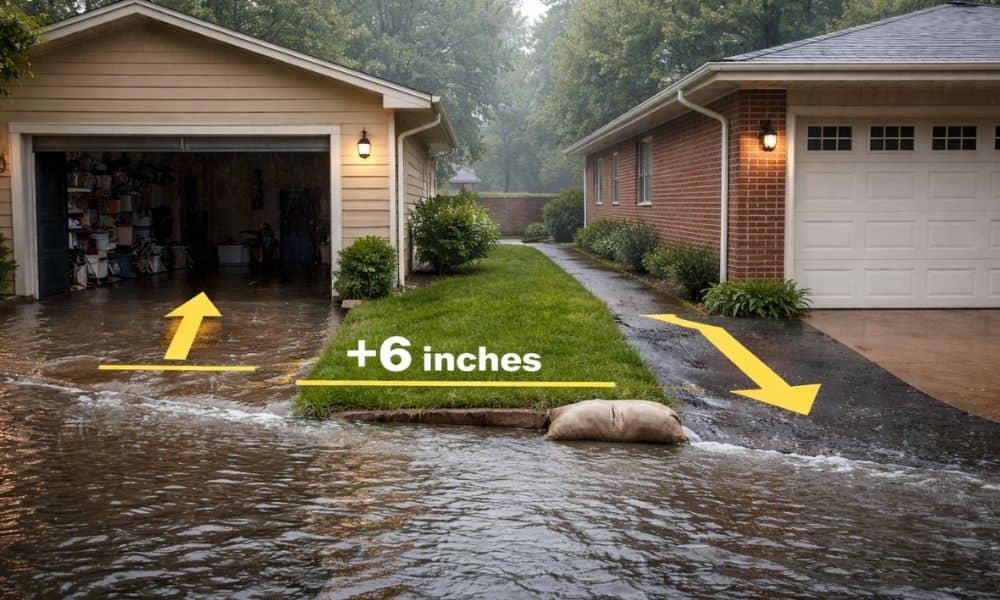
Last week, heavy rain poured over parts of Chicago. Streets filled fast. Cars stalled. Basements took on water. On one block, two houses sat side by side. One flooded. The other stayed dry. What made the difference? About six inches. That small change in height can decide where water goes. And the only way to see that difference clearly is with an elevation survey.
Water Follows the Lowest Point — Every Time
When rain falls hard, it does not spread out evenly. Instead, it moves with gravity. It looks for the lowest path and rushes there.
At first glance, many Chicago neighborhoods look flat. However, “flat” does not mean level. A yard might sit slightly lower than the sidewalk. A garage slab might sit just below the alley. A corner lot might dip where two streets meet.
During a light rain, you may never notice. But during a heavy storm, those few inches matter.
As a result, water gathers where the grade allows it to gather. And once it finds that low spot, it keeps flowing.
The Hidden Slopes on a Chicago Block
Chicago homes often share similar layouts. Yet small differences in grading create very different results.
For example, alleys get resurfaced every few years. Each new layer of asphalt adds height. Meanwhile, garage slabs stay the same. Over time, the alley may sit higher than the garage floor. When rain pours down, water runs straight toward the garage door.
In other cases, sidewalk panels settle. A slight tilt toward the foundation may not seem like a problem. However, during a cloudburst, that slope sends water right against the home.
Corner lots face another issue. Water from two directions meets at the lowest corner. If that corner sits below the street crown, water pools quickly.
Even front yards can cause trouble. If the yard sits lower than the curb, stormwater backs up toward the house instead of draining away.
All these situations come down to elevation. And most homeowners cannot see the problem by eye.
What an Elevation Survey Actually Shows
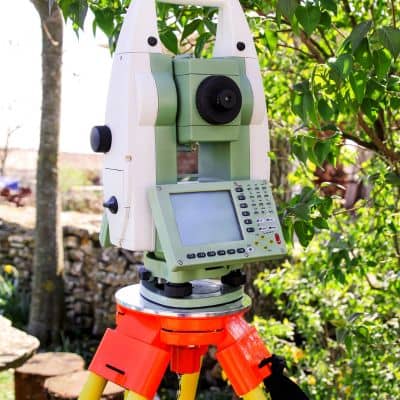
An elevation survey measures the height of key points on your property. It does not guess. It uses precise tools to record exact levels.
A licensed land surveyor measures:
- The top of curb
- The gutter flow line
- The sidewalk at several points
- The yard in front and back
- The alley elevation
- The garage slab
- The corners of the foundation
- Any visible low spots where water collects
Once those points get mapped, a clear picture forms. You can see where water starts. You can see where it moves. And most importantly, you can see where it ends up.
Instead of guessing, you get numbers.
Why Six Inches Makes a Big Difference
Six inches may not sound like much. After all, it is half a foot. Yet in drainage, that gap changes everything.
Imagine your garage slab sits six inches below the alley. When rainwater fills the alley, gravity pushes that water downhill. If your slab marks the lowest point, water flows straight inside.
Now imagine your neighbor’s slab sits six inches higher. Water reaches their driveway but keeps moving past. Their garage stays dry.
The storm did not choose one house over the other. The elevation did.
Therefore, the key question becomes simple: where does your house sit?
Why Quick Fixes Often Fail
After a flood, many homeowners rush to fix the problem. Some install drains. Others waterproof basement walls. Some raise landscaping or add gravel.
However, without elevation data, those fixes may miss the root cause.
For instance, a French drain may collect water but send it to another low area. New landscaping may block one path yet create a new flow toward the foundation. Waterproofing may stop minor seepage but fail during heavy rain.
In other words, fixing symptoms without understanding grades wastes time and money.
An elevation survey gives you the full story first. Then you can choose the right solution with confidence.
Chicago Storms Are Getting More Intense
Chicago has always seen strong storms. However, recent years have brought heavier downpours in shorter periods. When inches of rain fall within hours, drainage systems struggle to keep up.
Older neighborhoods face even greater risk. Many blocks rely on aging storm drains. If those drains clog or overflow, surface water looks for another path.
That path often runs through the lowest property on the block.
Because of that, small elevation errors that once caused minor puddles now cause flooded basements.
Who Should Consider an Elevation Survey
Not every home needs one. Yet certain situations make it wise.
If your basement has flooded before, even once, an elevation survey can reveal why. If you see standing water after storms, you should measure your grade. If you plan to finish a basement, knowing your elevation first protects that investment.
Buyers also benefit. When you look at a home in a flood-prone area, elevation data tells you more than a simple walk-through ever could.
Even before major landscaping or driveway work, checking elevation prevents future drainage mistakes.
In short, if water has ever raised questions about your property, elevation deserves attention.
Flooding Is Not Random
After a big storm, people often say, “That was just bad luck.”
However, flooding rarely happens by chance. It follows physics. Gravity does not guess. It moves water downhill every time.
If your property sits lower than the street, water will find it. If your garage floor dips below the alley, water will enter. If your yard slopes toward your foundation, water will collect there.
The difference between dry and flooded often measures only a few inches. Yet those inches shape the outcome.
An elevation survey turns that hidden difference into clear data. Instead of reacting after the next storm, you can prepare before it hits.
The storm may feel random. The water may seem unpredictable. But elevation always tells the truth.
Before the next heavy rain rolls through Chicago, ask yourself one simple question:
Do you know where your property stands?
