
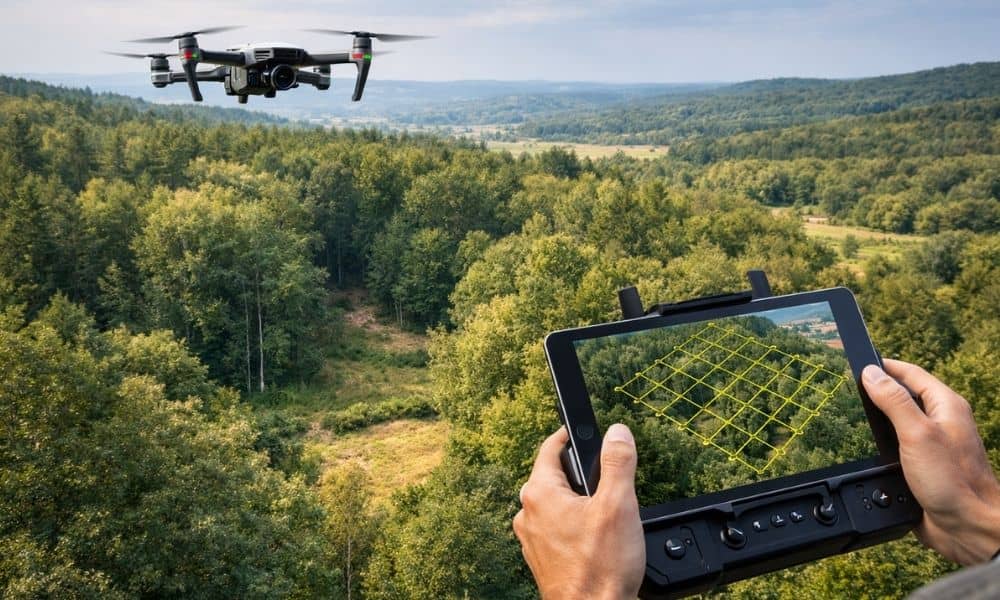
Drone surveying works great on open land. However, wooded sites around Chicago tell a different story. Trees block the ground, shadows hide details, and leaves confuse mapping software. As a result, many property owners get terrain models that look clean but miss real ground conditions.
So if you plan a home build, subdivision, driveway layout, or grading project on a tree-covered parcel, you need more than “a drone flight.” You need the right flight settings. In fact, small configuration choices make a big difference in ground accuracy.
Why Tree Cover Creates Problems in Drone Surveying
Drone surveying collects hundreds or thousands of photos and turns them into a surface model. That process works best when the camera can clearly see the ground. Unfortunately, heavy canopy blocks that view.
Instead, the drone often sees:
- leaves
- branches
- shadow patches
- moving foliage
Then the software tries to guess what sits underneath. Therefore, the final map may show “ground” that actually sits several feet above the soil. That error can affect slope planning, drainage paths, and building pad heights.
Because of that, surveyors change how they fly to wooded sites. They do not use the same settings they use for open fields.
What Ground Accuracy Means for Property Owners
Ground accuracy sounds technical, but the impact feels very practical.
Accurate ground data helps answer questions like:
- Where should the house pad sit?
- Will water drain toward or away from the structure?
- How steep will the driveway be?
- How much grading will the site need?
On the other hand, poor drone surveying data can lead to wrong assumptions. For example, a design based on leaf-top elevations instead of soil elevations can underprice earthwork or misplace improvements. Later, that mistake costs time and money.
So accuracy starts at flight planning — not just data processing.
Flight Pattern Choice: Why Crosshatch Beats Single Grid in Trees
Most basic drone surveying missions use a single grid flight pattern. The drone flies back and forth in straight lines and captures overlapping photos. That works fine on open land.
However, trees create blind spots between flight lines.
Therefore, surveyors often switch to a crosshatch pattern in wooded areas. In this method, the drone flies one grid, then flies a second grid at a different angle. As a result, the camera sees the same area from multiple directions.
That extra coverage helps software detect small ground gaps between branches. Although the flight takes longer, the terrain model improves.
For clients, this simply means: more flight passes usually equal better ground results under canopy.
Higher Image Overlap: The Canopy Rule
Overlap means how much each photo covers the same area as the next one. Standard drone surveying might use moderate overlap on clear sites. Dense trees need more.
Higher front overlap and side overlap give the software more matching points between images. Consequently, the model gains more chances to “see” the ground through openings in the canopy.
Without enough overlap, the software fills holes with estimates. With higher overlap, it uses real visual matches more often.
So when a surveyor says they plan a higher-overlap mission, that signals a quality move — not wasted effort.
Altitude Strategy: Not Too High, Not Too Low
Many people assume lower flight altitude always improves accuracy. That idea only works when the ground stays visible. In heavy trees, very low flights mostly capture leaves in higher detail — not soil.
Instead, surveyors choose altitude based on:
- tree height
- canopy thickness
- terrain variation
A slightly higher altitude can sometimes create better viewing angles between branches. Meanwhile, too high an altitude reduces ground resolution.
Therefore, good drone surveying balances coverage and detail instead of following a fixed height rule.
Slower Flight Speed Improves Usable Images
Wooded sites create darker scenes because the canopy blocks sunlight. Darker scenes force longer camera exposure times. Longer exposure increases blur risk if the drone moves too fast.
So surveyors often slow the drone down under tree cover. Slower speed produces sharper images. Sharper images produce stronger point matches. Stronger matches produce better ground models.
Although slower flights add time, they also add usable data. For planning work, that trade usually pays off.
Time of Day Changes Your Results
Sun angle matters more than most people expect. Early morning and late afternoon light creates long shadows. Under trees, those shadows hide ground detail.
Midday flights often reduce shadow length. As a result, more ground pixels stay visible between branches. Therefore, many wooded drone surveying missions aim for mid-day windows when possible.
In addition, Chicago seasons matter. Leaf-off periods in late fall, winter, and early spring often improve ground visibility. Without leaves, the camera sees more soil between limbs. That seasonal timing alone can boost terrain accuracy.
Wind and Moving Leaves Distort Data
Wind causes another hidden problem. When leaves and branches move between photos, the software struggles to match features. That mismatch creates noisy or warped surfaces.
Because of that, surveyors prefer calm days for wooded drone surveying. Even light wind can reduce model quality under dense canopy. So sometimes a flight gets delayed not because of rain, but because of leaf motion.
From a client view, that delay protects data quality.
Ground Control Points Lock the Model to Reality
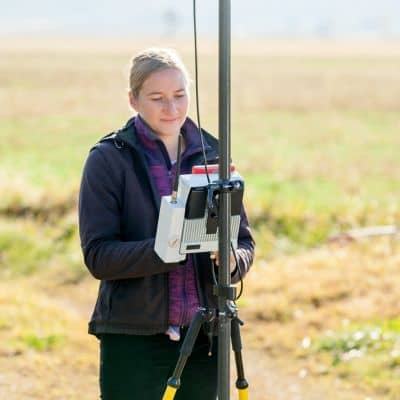
Even with perfect flight settings, drone GPS alone does not deliver survey-grade elevation accuracy. That’s why many professional drone surveying projects use ground control points, or checkpoints.
These marked points sit on the ground and have precisely surveyed coordinates. The processing software uses them to anchor the model to real-world positions.
In wooded terrain, control points matter even more. They help correct small distortions caused by limited ground visibility. Therefore, when elevation decisions matter, control support adds confidence.
When Dense Trees Call for LiDAR Instead
Sometimes the canopy becomes too thick for photo-based drone surveying. If very little ground shows through, even optimized settings cannot recover enough soil points.
In those cases, LiDAR scanning often works better because it can penetrate gaps in vegetation with laser pulses. A good surveyor will say so upfront and recommend the right method instead of forcing the wrong one.
That honesty protects your project.
Final Thoughts
Drone surveying on wooded Chicago parcels demands more than a quick flight. It requires smart mission design. Crosshatch patterns, higher overlap, balanced altitude, slower speed, calm weather, and proper timing all improve ground accuracy.
Most importantly, these choices affect real planning outcomes — not just pretty maps. So before you rely on drone data for clearing, grading, or design, ask how the mission will handle tree cover.
The right settings today prevent expensive surprises tomorrow.
