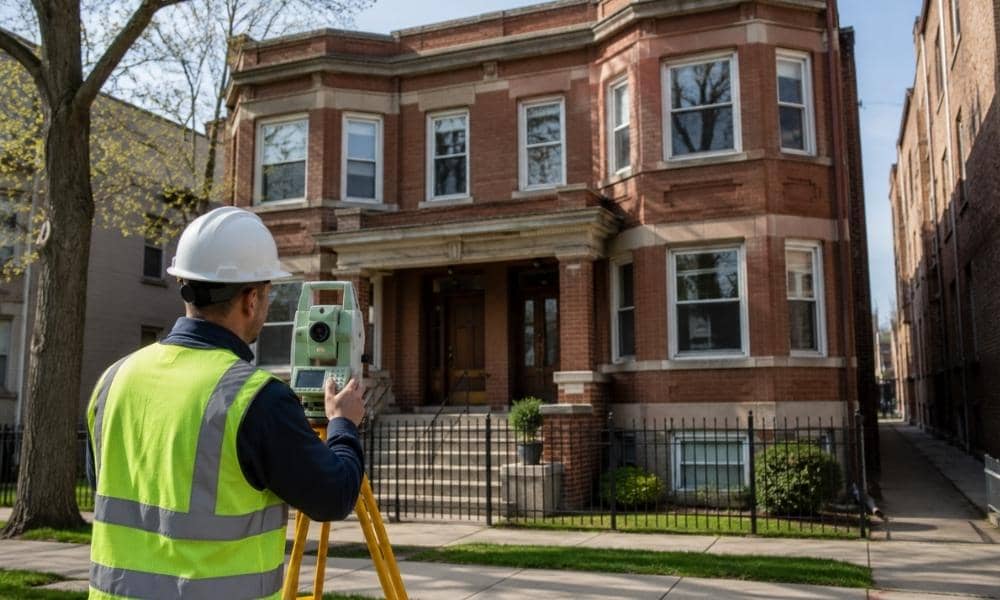
Chicago has thousands of two-flats. Most went up between 1890 and 1930. Brick courtyard buildings. Worker cottages turned into two units. Old greystones with a hundred years of history baked into the walls.
These buildings have charm. They also carry hidden risks that only show up when you try to sell.
A property survey is the tool that catches these risks early. Not a generic “confirm the lot lines” survey. A survey that looks closely at what a century of changes did to the property.
Here’s what that means for you if you’re selling an older two-flat.
When the Original 1900s Plat Doesn’t Match What’s Standing Today
Many two-flats sit on lots that were platted before modern zoning rules existed. The city drew these lot lines over a hundred years ago.
Since then, owners added porches. They rebuilt bump-outs. They extended kitchens into the side yard.
A current survey compares the official plat to what’s actually standing. Often, the building doesn’t match the paper. An addition might sit a foot over the line. A porch might extend past the setback.
Buyers’ attorneys look for this. So do lenders. Finding it now, before you list, gives you time to fix it. Finding it during closing can kill the deal.
Shared Walls, Shared Risk: Party Wall Lines in Attached Two-Flats
Chicago is full of attached and semi-attached two-flats. Your building might share a wall with the one next door.
That shared wall raises a simple question: who owns it?
A survey plots the exact location of that wall against the property line. Sometimes the wall sits dead center. Sometimes it doesn’t. Old deeds rarely spell this out clearly. Neighbors often rely on handshake agreements passed down for decades.
Buyers’ lenders want documentation, not tradition. A survey gives them a clear answer instead of a guess.
The Undocumented Unit Problem: Matching the Survey to Legal Occupancy
Over decades, many two-flats picked up a third unit. Maybe a finished basement. Maybe a converted attic.
Often, nobody pulled a permit.
A survey alone won’t tell you if a unit is legal. But paired with zoning and permit records, it shows whether the building’s footprint matches what the city allows for a two-unit property.
This matters a lot to buyers. An unpermitted third unit can affect financing, insurance, and resale value. Sellers who catch this early can address it before a buyer’s inspector does.
Rear Coach Houses, Garages, and Additions That Crept Over Time
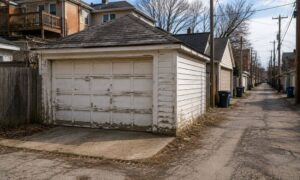
Look behind most older two-flats and you’ll find a garage. Some lots even have an old coach house.
These structures often went up without any survey at all. Over the decades, some settled. Some got rebuilt after fires or storm damage. Some were expanded informally, foot by foot.
The result: garages that now sit over the property line. Or worse, over the public alley.
A survey catches this before a buyer does. It’s much easier to resolve an encroachment before you’re under contract than during a 30-day closing window.
Why Buyers’ Lenders Reject a Survey That’s Older Than the Roof
Here’s a common scenario. A two-flat was last sold 30 or 40 years ago. The seller still has that old survey in a filing cabinet.
Problem is, that survey predates every addition, garage rebuild, and fence change made since.
Lenders and title companies are getting stricter. Many won’t accept a survey that old, especially when the property has visibly changed. They want a current survey that reflects the building as it stands today.
Getting a new survey done before listing avoids a scramble later. It also signals to buyers that you’ve done your homework.
What This Means If You’re Selling
Older two-flats come with more baggage than a typical property. Not bad baggage, just decades of small changes nobody wrote down.
A survey brings all of that to the surface while you still have time to deal with it. That’s really the whole point. Fix it now, on your schedule, instead of scrambling once a buyer’s attorney flags it two weeks before closing.